Chicken Tractor Plans 101: Cost, Sizing, and What Works
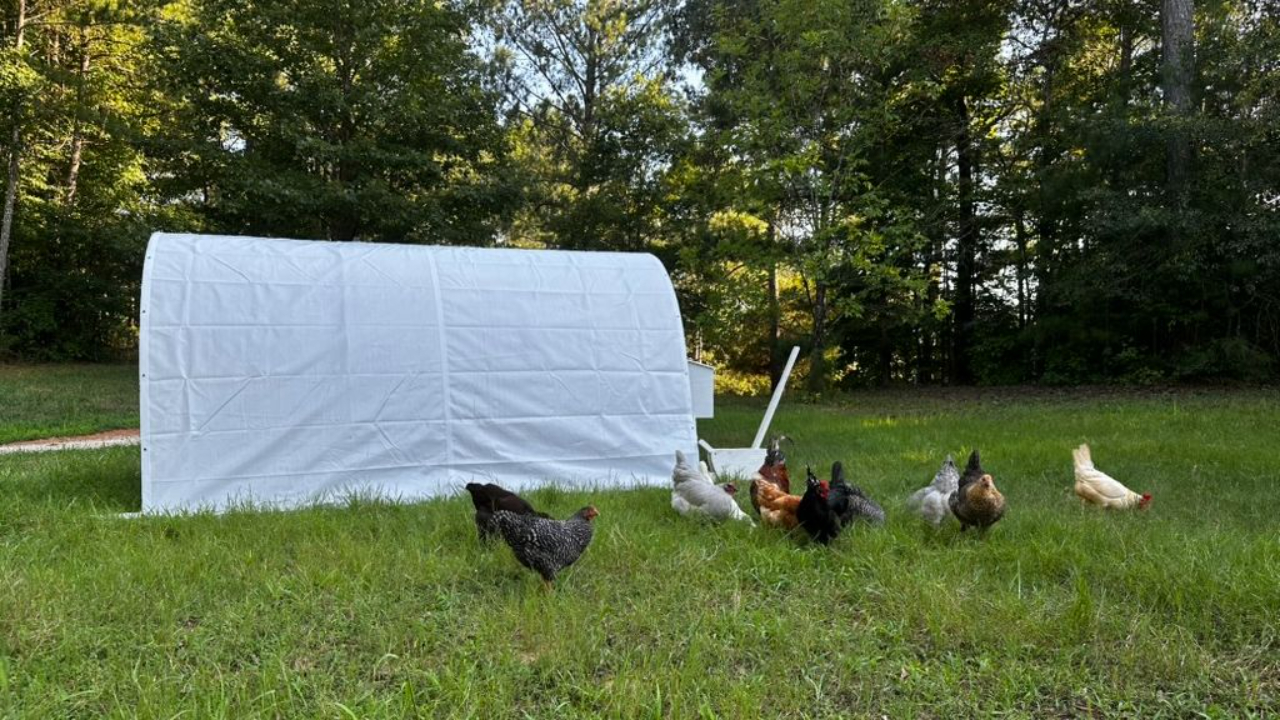
Keep your chickens in one spot and the ground under them turns into a mud and manure pit within weeks. Let them free range and you're gambling on every hawk, fox, and raccoon in the area. Neither option is good for the birds or the pasture.
A chicken tractor solves both problems by moving as often as needed, giving your flock fresh ground and keeping them enclosed and protected at the same time. But not all builds are equal, and most people get the sizing or the predator-proofing wrong on their first attempt.
That's what solid chicken tractor plans are for. Get the size, materials, and predator protection right from the start, and you build once instead of three times.
Why These Chicken Tractor Plans Work (And How We Know)
We've used this hoop coop design for years on our land in Georgia, USA. Our over 10,000 customers across the world have put it to work in nearly every climate you can raise chickens in.
-
Customers have built this exact design from Arkansas heat to Alaska winters
-
On our own land, we deal with coyotes, foxes, raccoons, owls, and hawks
-
We have never had a predator get into our coop with this design
Hoop Coop Chicken Tractor Sizing by Flock Size
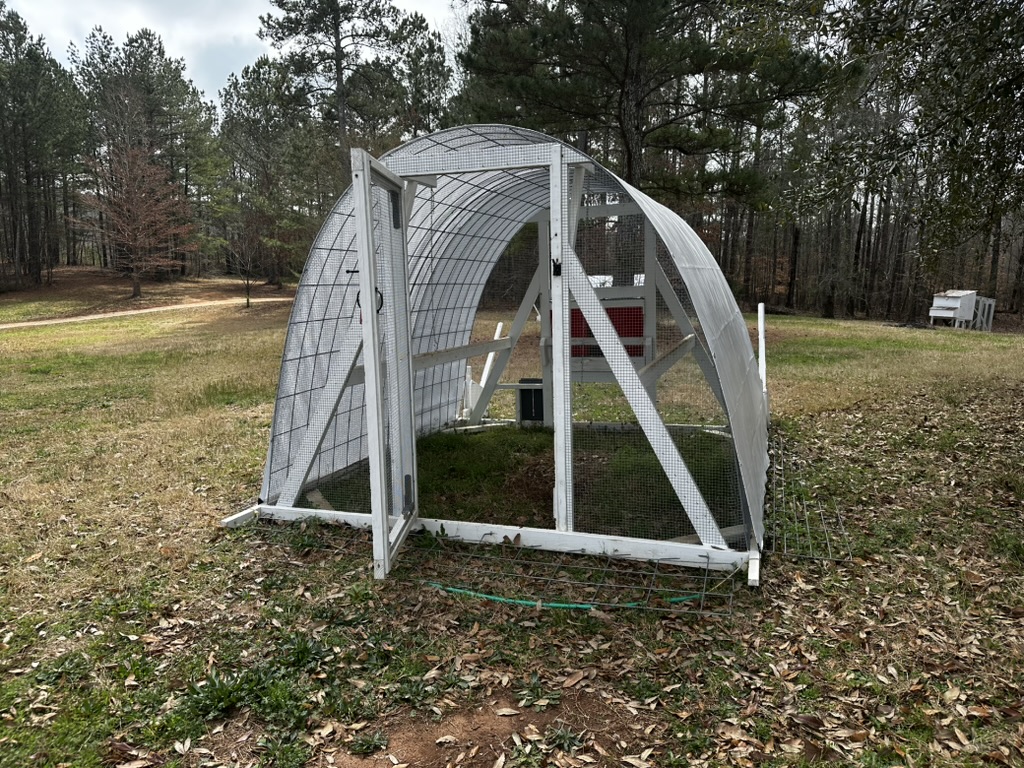
Space needs depend on how you plan to raise your birds, not just how many you have.
-
Free ranging: about 4 sq ft per bird
-
Confined to the tractor full time: 8–12 sq ft per bird
-
Roost space: 10–12 inches per bird
Here's what that looks like in our hoop coop chicken tractor build:
2 Panel Coop — 8 ft wide x 8 ft 4 in long
-
200 inches of roost space
-
67 sq ft of run space
-
Holds 16–20 free-ranging hens, or 26+ broiler chickens
3 Panel Coop — 8 ft wide x 12 ft long
-
288 inches of roost space
-
96 sq ft of run space
-
Holds 24–30 free-ranging hens, or 30+ broiler chickens
Takeaway: if you're running 20 hens or fewer, a 2 panel coop covers you. Past that, or if you're raising a bigger batch of broilers, size up to the 3 panel.
Chicken Tractor Cost: What Our Builders Actually Paid
Cost is the first question every builder asks and the honest answer is that it depends on your local lumber prices.
Baseline build cost, includes the wheel system, coop, and nest box:
-
2 Panel Coop: $550
-
3 Panel Coop: $600
Real customer costs reported since then:
-
2 Panel Coop in Arkansas: $300
-
3 Panel Coop in Alaska: $800
Same design, two different regions, a $500 spread. Lumber is the single biggest swing factor in your total. Price your local 2x4s and hardware cloth before you lock in a budget.
These figures don't include optional add-ons:
-
Auto chicken door
-
Solar lights
-
Winter panel
Takeaway: budget $300–$500 for a 2 panel build and $500–$800 for a 3 panel, then add on top for any accessories you want.
Want the exact tools and supplies we use? Here's our build list: Cotton River Farm Amazon Idea List
Predator-Proofing and Storm-Proofing a Hoop Coop Chicken Tractor
A chicken tractor is only as strong as its weakest entry point. We deal with coyotes, foxes, raccoons, owls, and hawks on our land, and this design has kept every one of them out.
Skip chicken wire. It's built to keep chickens in, not to keep predators out.
Standard chicken wire bends and tears easily under a raccoon's grip or a fox's jaw. Welded hardware cloth is the material that actually holds up.
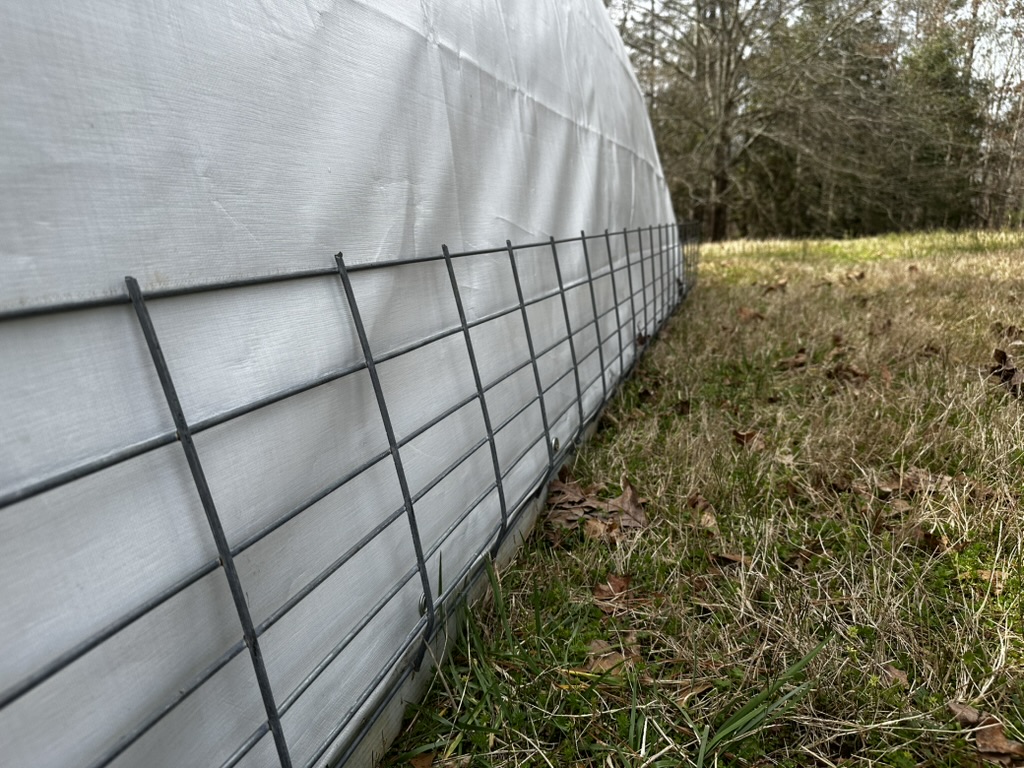
The single biggest fix is a predator apron.
A predator apron is a strip of hardware cloth that runs outward from the base of the coop and lies flat on the ground. Diggers like foxes and raccoons hit the wire before they ever reach the birds, instead of digging straight under the wall.
Takeaway: a properly installed predator apron closes off ground-level digging, a common way predators get in, and it's one of the cheapest upgrades you can make.
High winds and storms are the other real threat, and this design has been tested by both. When Hurricane Helene hit our area, we made zero modifications to our coop, and both the coop and flock came through safe. One of our customers on the Florida coast took an almost direct hit from Hurricane Milton. Her coop and flock were safe too. The only thing she had to replace afterward was the tarp.
Takeaway: this hoop coop design has held up through two hurricanes with no structural changes required. Keep a spare tarp on hand, since that's the one part built to take the hit in extreme wind.
Chicken Tractor vs Coop: Common Questions
What's the difference between a chicken tractor and a chicken coop?
A chicken coop stays in one fixed spot and needs regular manual cleaning. A chicken tractor is a movable, usually floorless pen you relocate across pasture. Moving the tractor spreads manure naturally and gives the flock fresh ground instead of letting waste build up in one place. It's healthier for the birds and way less mess for you.
How big should a chicken tractor be for 25 chickens?
For 25 birds, aim for roughly 67–96 sq ft of run space and 200–288 inches of roost space, depending on whether they're free-ranging hens or confined broilers. A 3 panel hoop coop (8 ft x 12 ft) comfortably holds 24–30 free-ranging hens or 30+ broilers.
How much does it cost to build a chicken tractor?
Expect $300–$500 for a smaller 2 panel build and $500–$800 for a larger 3 panel build, including the wheel system, coop, and nest box. Local lumber prices are the biggest factor, so check materials costs in your area before setting a budget.
How do you keep predators out of a chicken tractor?
Use welded hardware cloth instead of chicken wire and add a predator apron: a strip of wire that extends outward from the coop's base and lies flat on the ground. It stops diggers like foxes and raccoons before they reach the birds.
Does a hoop coop need a foundation?
No. A hoop coop chicken tractor is built to sit directly on the ground and move regularly, so it doesn't need a permanent foundation. A ground-level predator apron does the job a foundation would, keeping diggers out without anchoring the coop in place.
How often should you move a chicken tractor?
Most pastured poultry keepers move their tractor once a day. Daily moves keep birds on fresh grass, prevent manure buildup, and spread fertility evenly across the pasture instead of concentrating it in one spot.