How We Store Fresh Eggs on Our Farm (And Why I Don't Stress About It)
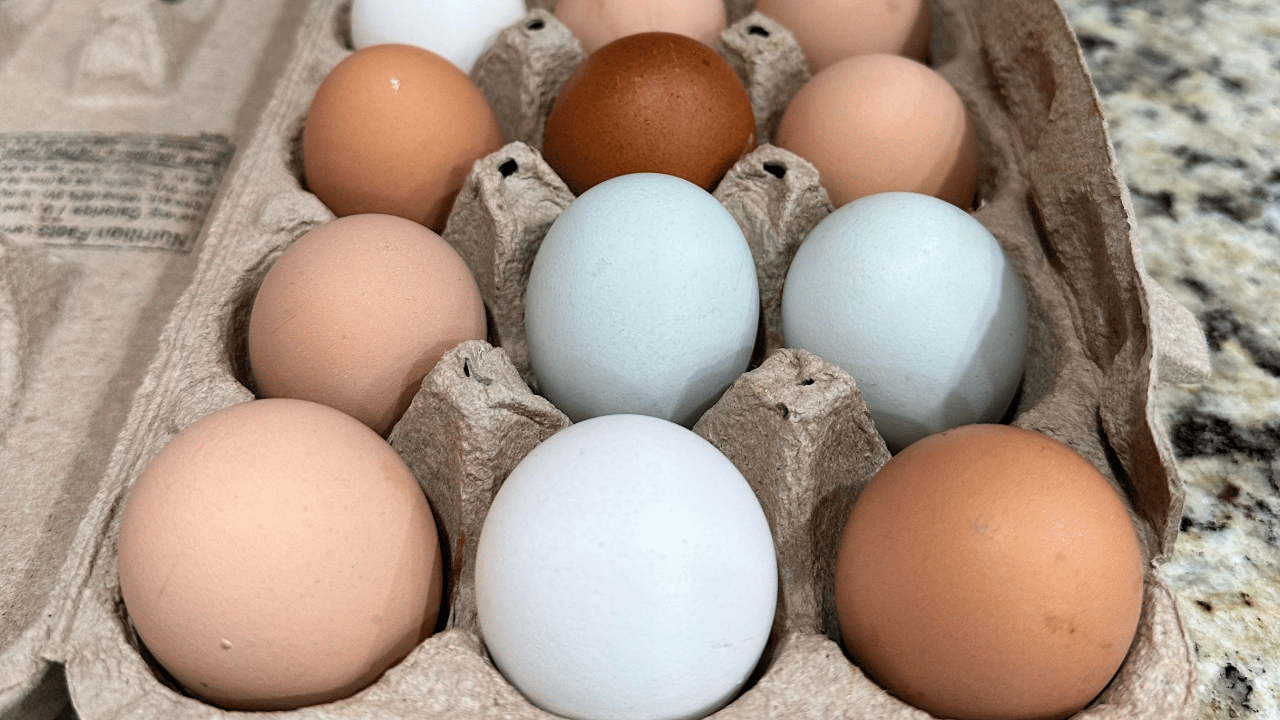
Some people wash every egg as soon as they bring it inside and others won't wash an egg until they're ready to crack it into a pan. Some people refrigerate everything, while others proudly leave dozens of eggs sitting on the counter.
Who's right?
Honestly, I don't think there is one perfect answer.
There are a lot of opinions surrounding fresh egg storage and over the years I've learned that most people settle into a routine they're comfortable with. This article isn't meant to tell you that everyone else is wrong or that my way is the only way. Instead, I want to walk you through exactly what we do on our farm, explain why we've made those choices, and hopefully help you feel more confident deciding what works best for your family.
One thing that never changes, though, is that every egg gets inspected before it ever comes into our kitchen. If I find a crack, that egg doesn't get stored. Instead, I toss it back out to the chickens or bury it in the garden where it adds nutrients back into the soil. Either way, it doesn't go to waste.
From there, our routine is actually pretty simple.
Dirty Eggs Get Washed. Clean Eggs Stay Clean.
Personally, I don't wash every egg we collect. If an egg comes into the house clean, I leave it exactly as it is. If it's dirty, I'll wash it with a gentle soap and a soft egg scrubber. I always use lukewarm water because water that's too hot or too cold can make it easier for bacteria to pass through the shell. Once the eggs are clean, I dry them thoroughly before putting them in the refrigerator.
The reason they go straight into the refrigerator has everything to do with something called the bloom. The last thing a hen does before laying an egg is coat it with a thin, natural protective layer called the bloom. Since eggshells are naturally porous, that bloom acts like a barrier and helps protect the inside of the egg. Once I've washed that bloom away, I no longer consider the egg shelf stable, so those eggs stay refrigerated.
Why Most of Our Eggs Stay on the Counter
In many countries around the world, storing unwashed eggs on the counter is completely normal.
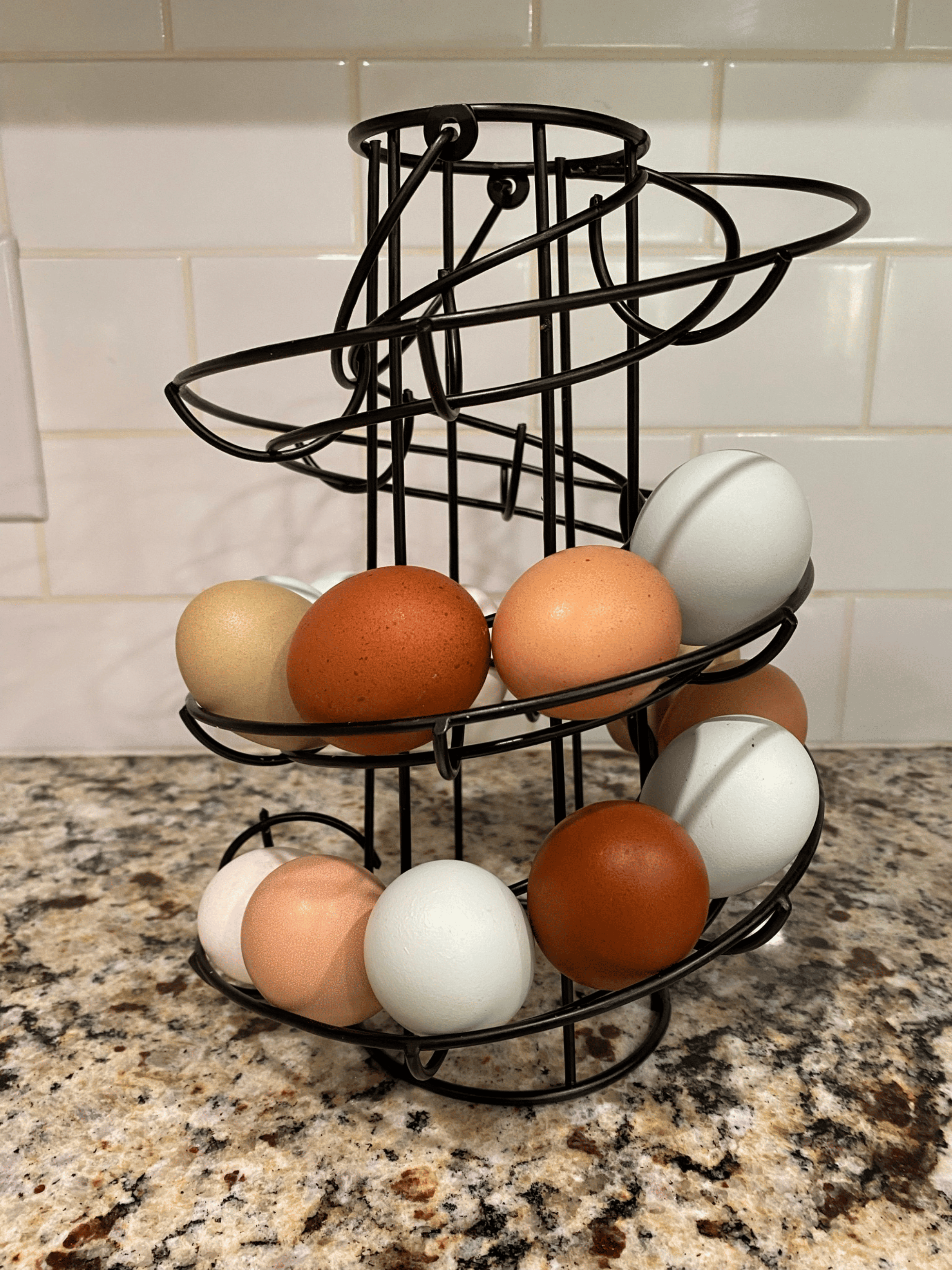
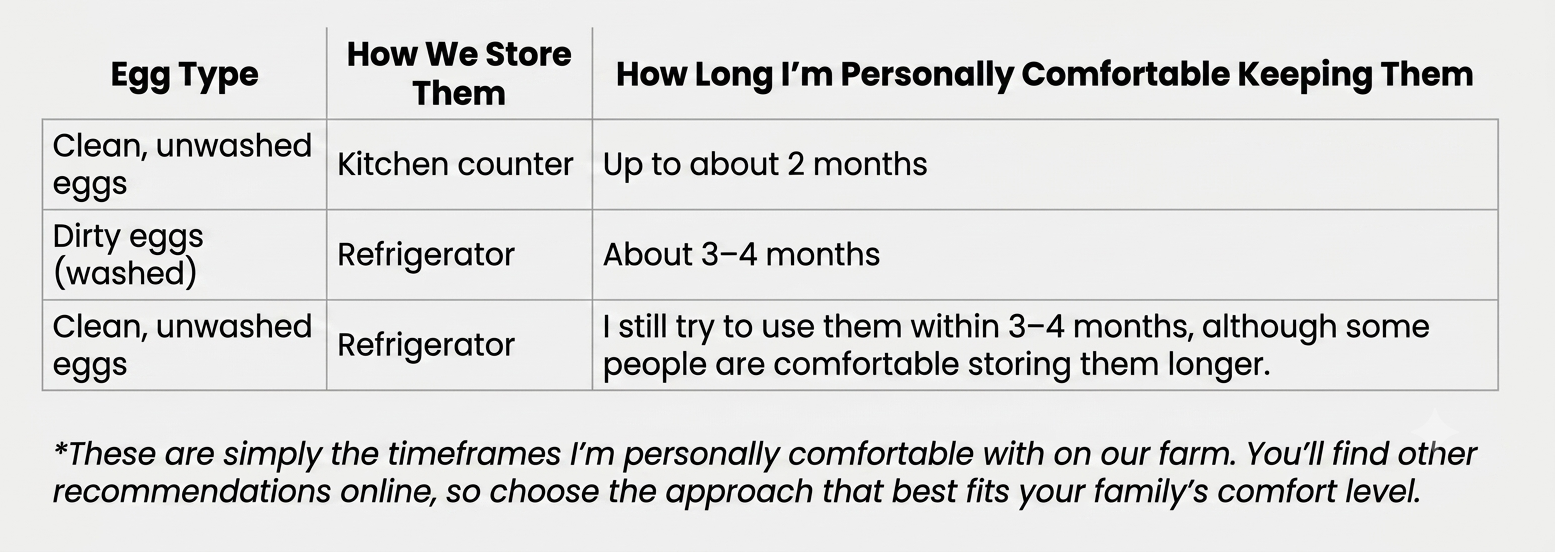
For our family, countertop storage simply makes sense because we go through eggs quickly. Between cooking at home and sharing extras with family and friends, they rarely sit around long enough for storage to become an issue. Personally, I'm comfortable leaving unwashed eggs on the counter for up to about two months, although ours are almost always gone well before then.
If we're getting ready to leave town or I know they won't be used for a while, I'll move them into the refrigerator instead.
Can You Refrigerate Unwashed Eggs?
Absolutely.
Keeping the bloom intact doesn't mean eggs can't go into the refrigerator. In fact, refrigeration can extend their shelf life even longer.
You'll hear all kinds of numbers online. Some people are comfortable storing unwashed refrigerated eggs for up to six months. Personally, I try to use ours within three to four months.
That timeframe surprises a lot of people until they realize fresh eggs from your backyard are much fresher than the ones sitting in the grocery store. Commercial eggs have to be collected, processed, packaged, shipped, distributed, and stocked before they ever make it into your shopping cart. By comparison, the eggs sitting on my counter were probably laid this morning.
At a Glance: How We Store Fresh Eggs
I Think We Worry Too Much About Egg Storage
This might be an unpopular opinion, but I honestly think many chicken keepers spend more time worrying about how to store eggs correctly than they do thinking about how many eggs they're producing in the first place.
One of my goals has always been to keep a laying flock that meets our family's needs rather than greatly exceeding them. We enjoy fresh eggs almost every day and anything we don't use gets shared with family and friends. Because of that, I rarely have dozens and dozens of eggs sitting around wondering how long they'll keep.
For me, that's a much simpler solution than trying to maximize storage time.
Final Thoughts
There are plenty of experienced chicken keepers who do things differently than I do and that's okay.
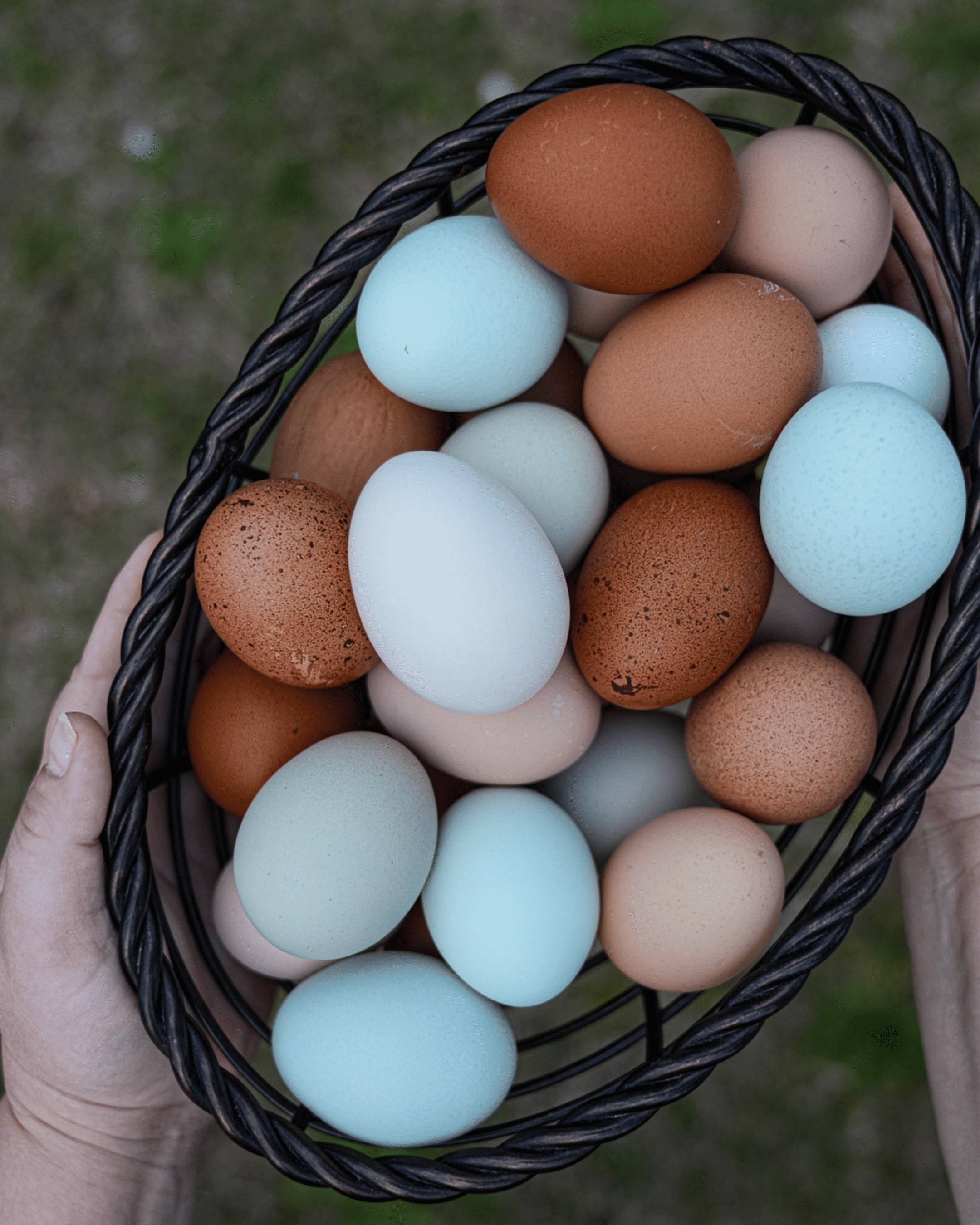
This is simply the routine that's worked well for our family over the years. Clean eggs stay on the counter, dirty eggs get washed and refrigerated, and if I ever have an egg I'm unsure about, I don't overthink it or try the float test. It goes back to the chickens or into the garden where it can do some good instead of ending up in the trash.
At the end of the day, raising chickens should make life simpler, not more stressful. Find a system you're comfortable with, stay consistent, and enjoy those fresh eggs. After all, that's one of the best parts of having backyard chickens.