
Every Year I Get People Telling Me Chickens Will Freeze In This Coop
Here's what they don't know about winter and mobile coops.
YES, SHOW MEMost people think a mobile coop can't work in winter.
They believe chickens need to be locked up in a stationary coop with heat lamps and electricity to survive the cold months.
We understand why you might think that. When you're responsible for keeping your flock alive through winter, you want something that feels safe and warm.
Here's what we've actually found after using these coops for years and watching our customers keep their flocks thriving through winters.
The belief that mobile coops can't handle winter is based on a misunderstanding of what chickens actually need to survive cold weather.
Winterize Your Hoop Coop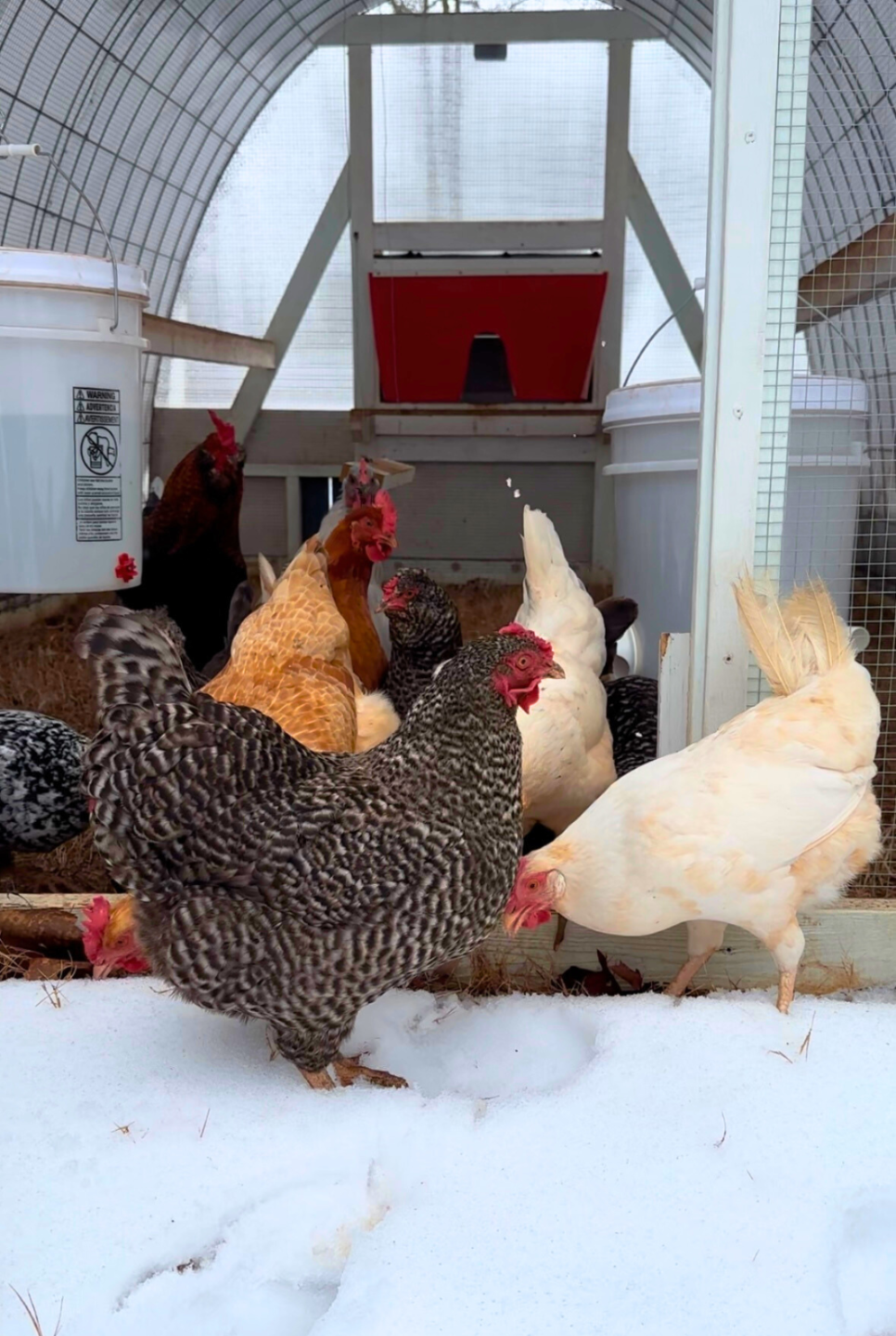
Why Winter Kills Chickens.
It's not the cold itself that kills chickens. It's moisture combined with poor ventilation that creates the conditions for disease and frostbite. When chickens are locked in a stationary coop, their body heat and droppings create moisture inside. Temperature swings between the warm coop and the freezing outside air cause can cause moisture to condense and freeze on combs, wattles, and feet.
Chickens have sensitive respiratory systems that are vulnerable when ammonia builds up from droppings in poorly ventilated spaces. This ammonia damages their lungs and leads to respiratory infections. Also, the shock of going from a warm or hot coop directly into extreme cold also stresses their system and makes them more susceptible to illness.
Most people think they need to seal up the coop to keep warmth in. Sealing the coop blocks ventilation, traps moisture and ammonia, and creates the exact conditions that kill their flock.
A mobile coop changes that equation entirely.
Winterize Your Hoop Coop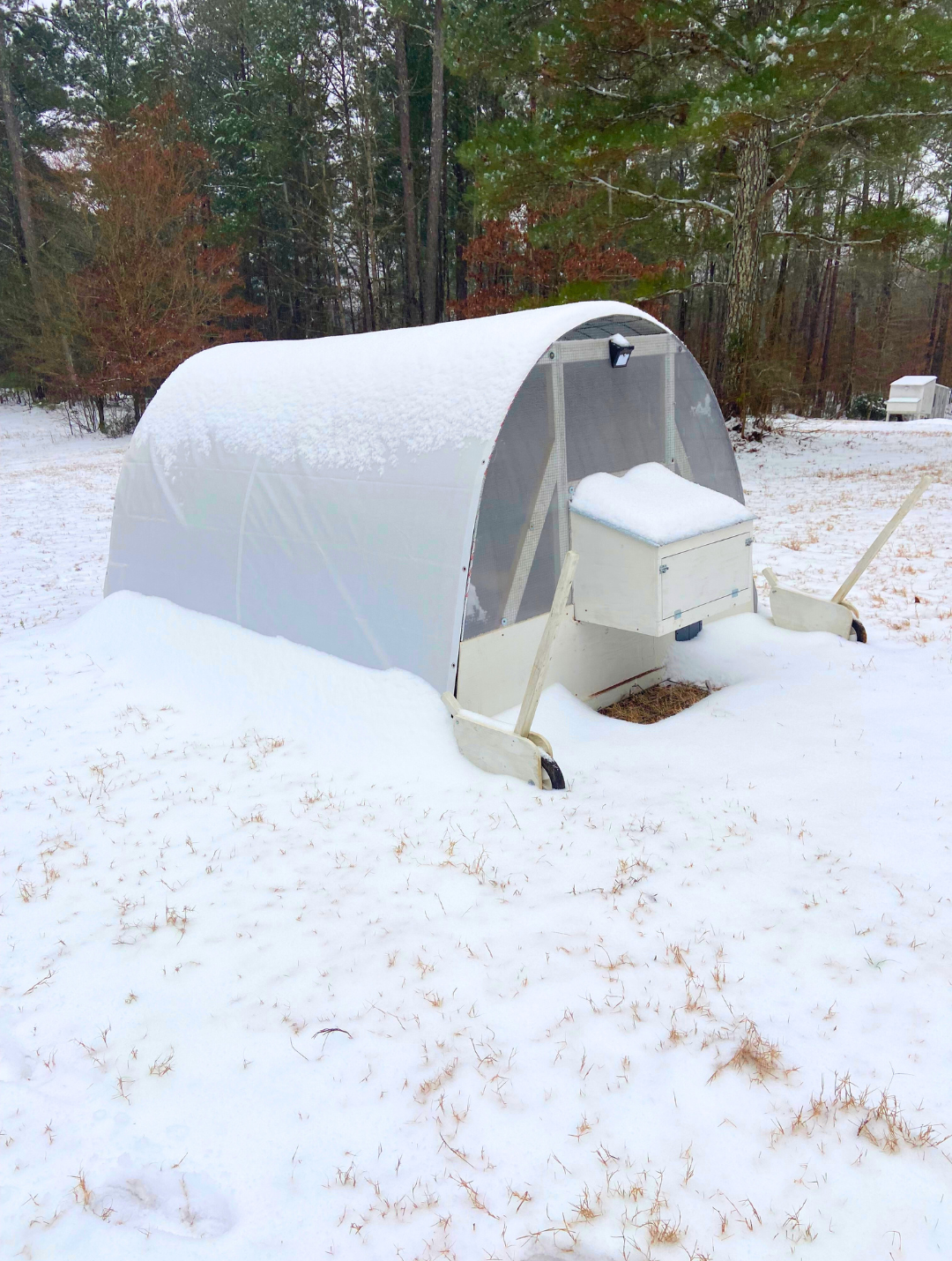
How The Hoop Coop Design Actually Keeps Chickens Alive In Winter
The design allows for proper ventilation without drafts. Moisture doesn't build up inside the coop, which prevents the conditions that lead to frostbite and respiratory infections. The hoop structure naturally sheds snow and ice instead of collecting it on a flat roof.
The hardware cloth and frame protect them from predators that are more aggressive in winter when food is scarce. The wheels let you move the coop to fresh ground, which means better drainage and cleaner conditions.
You're not relying on heat lamps or electricity. You're relying on a system where the design, the ventilation, and the mobility work together to keep your chickens healthy.
SEE IT IN ACTIONFor Extreme Cold and Heavy Snow
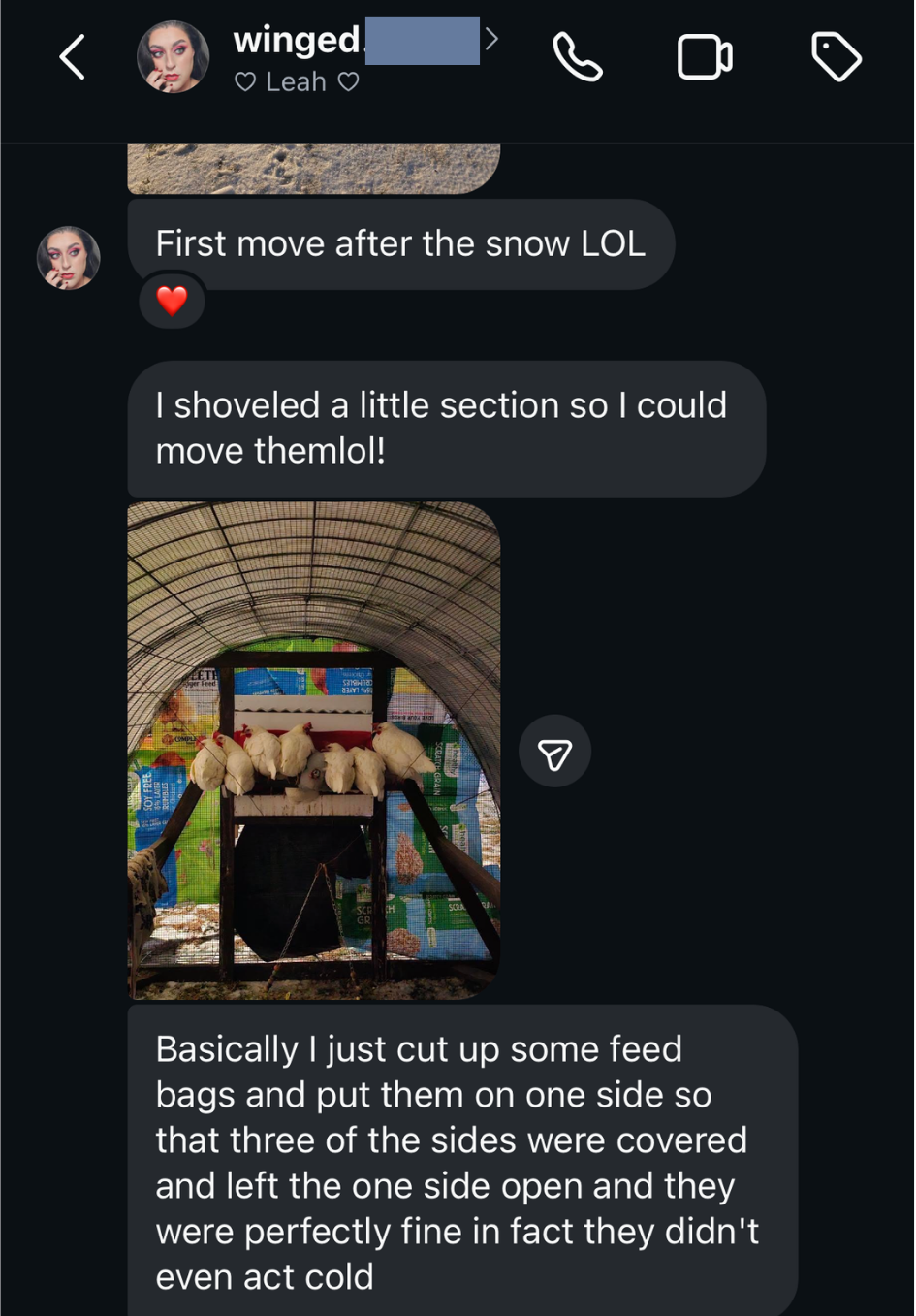
In areas with extreme cold or heavy snow, you have options that work with the coop design. You can leave the coop stationary during winter only and add bedding for extra insulation. Flip your roost bars so the wide side is up, which lets your chickens tuck their toes underneath their body for warmth. Add panels to both ends of the coop to block wind while maintaining ventilation. You can even hang radiant heaters from the roost bars if you need extra warmth. The coop design accommodates all of these adjustments.
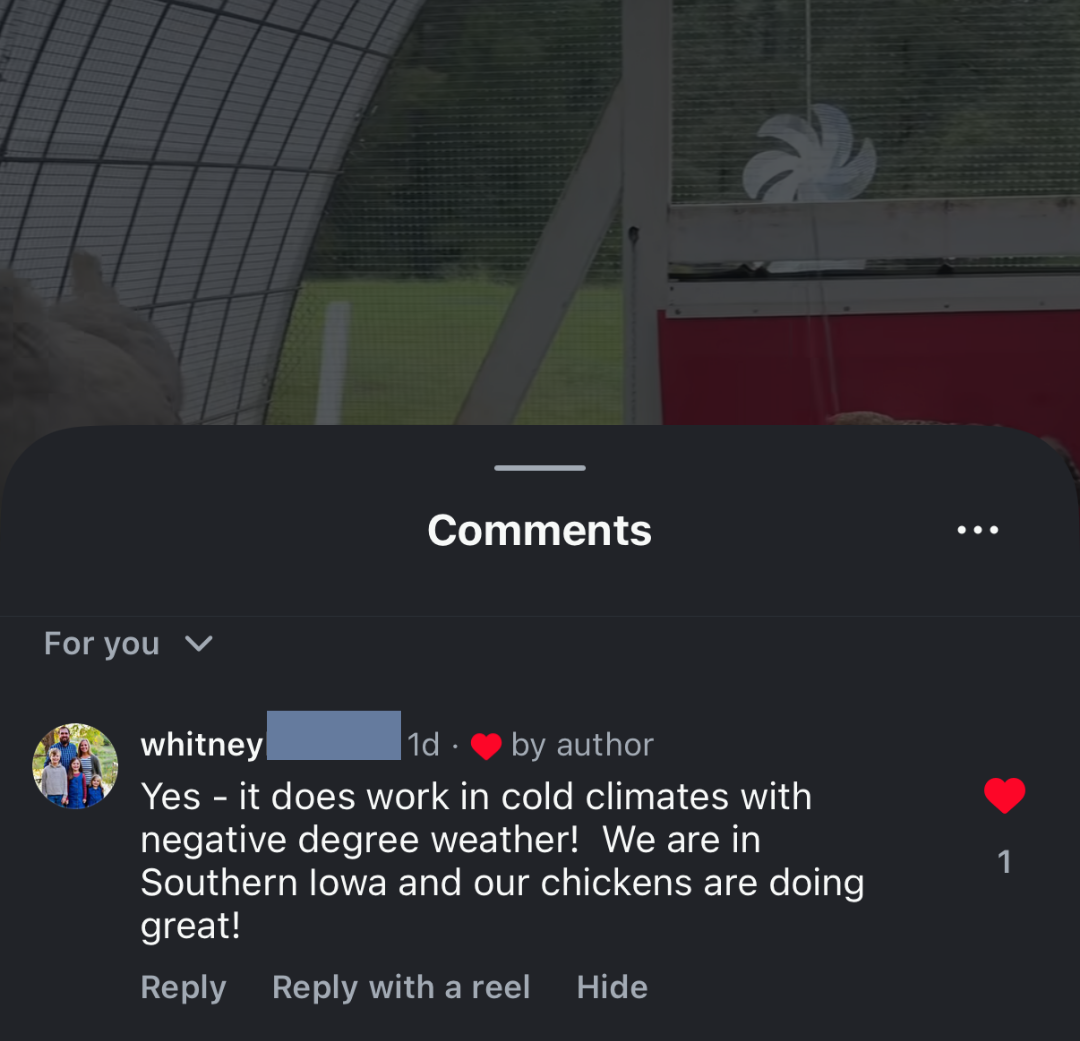
We have customers in Alaska, Canada, and Norway using these coops!
What Our Customers Have Actually Experienced
One of our customers in Minnesota kept her flock in a hoop coop through a winter that hit 20 below zero. Her chickens not only survived, they kept laying without a heat lamp or electricity, just the coop.
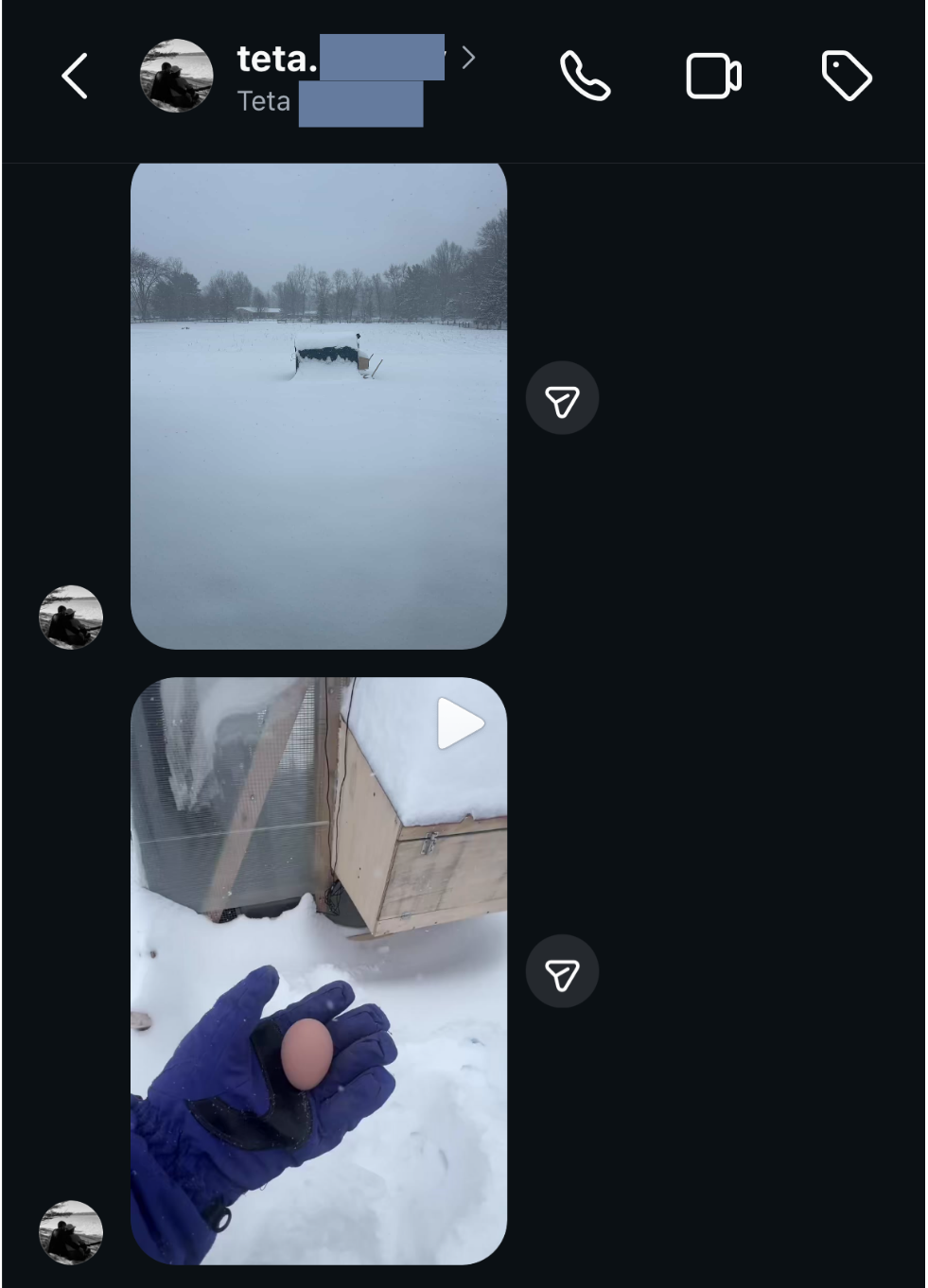
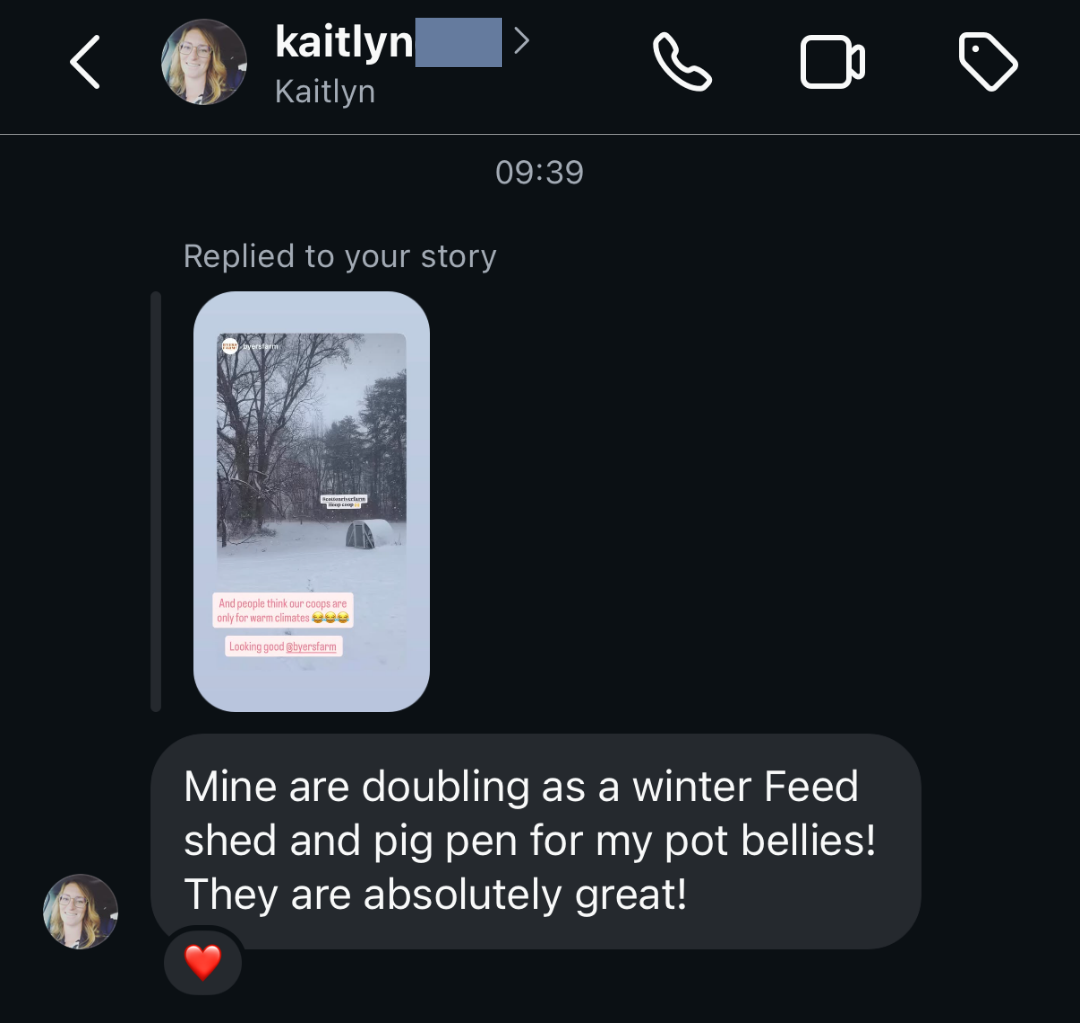
Our customers have watched their flocks stay healthy through winters that would have killed birds in traditional stationary coops. They've moved their coops to fresh ground and avoided the buildup of moisture and disease. They've kept their egg production up when everyone else's dropped to nothing.
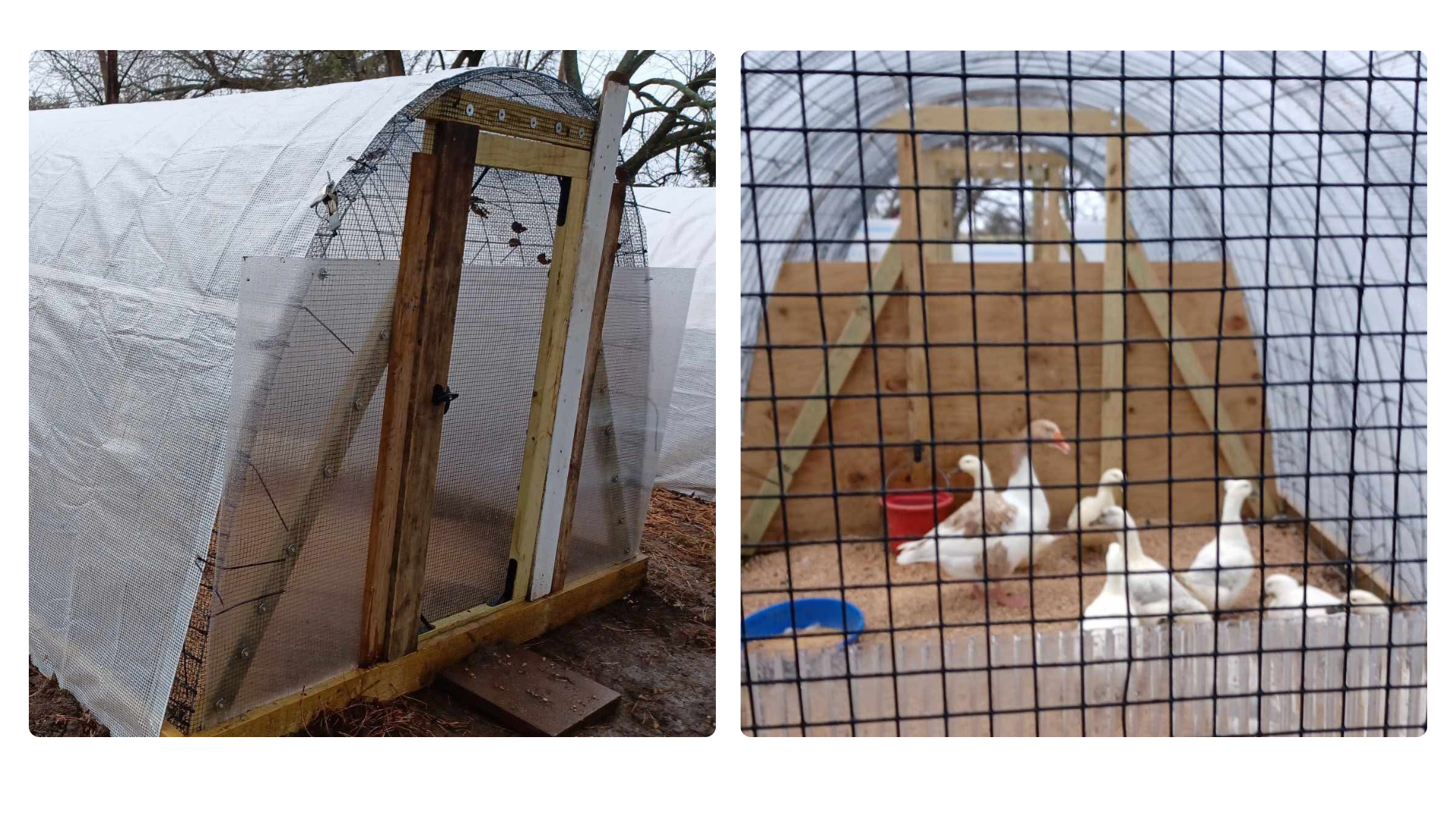
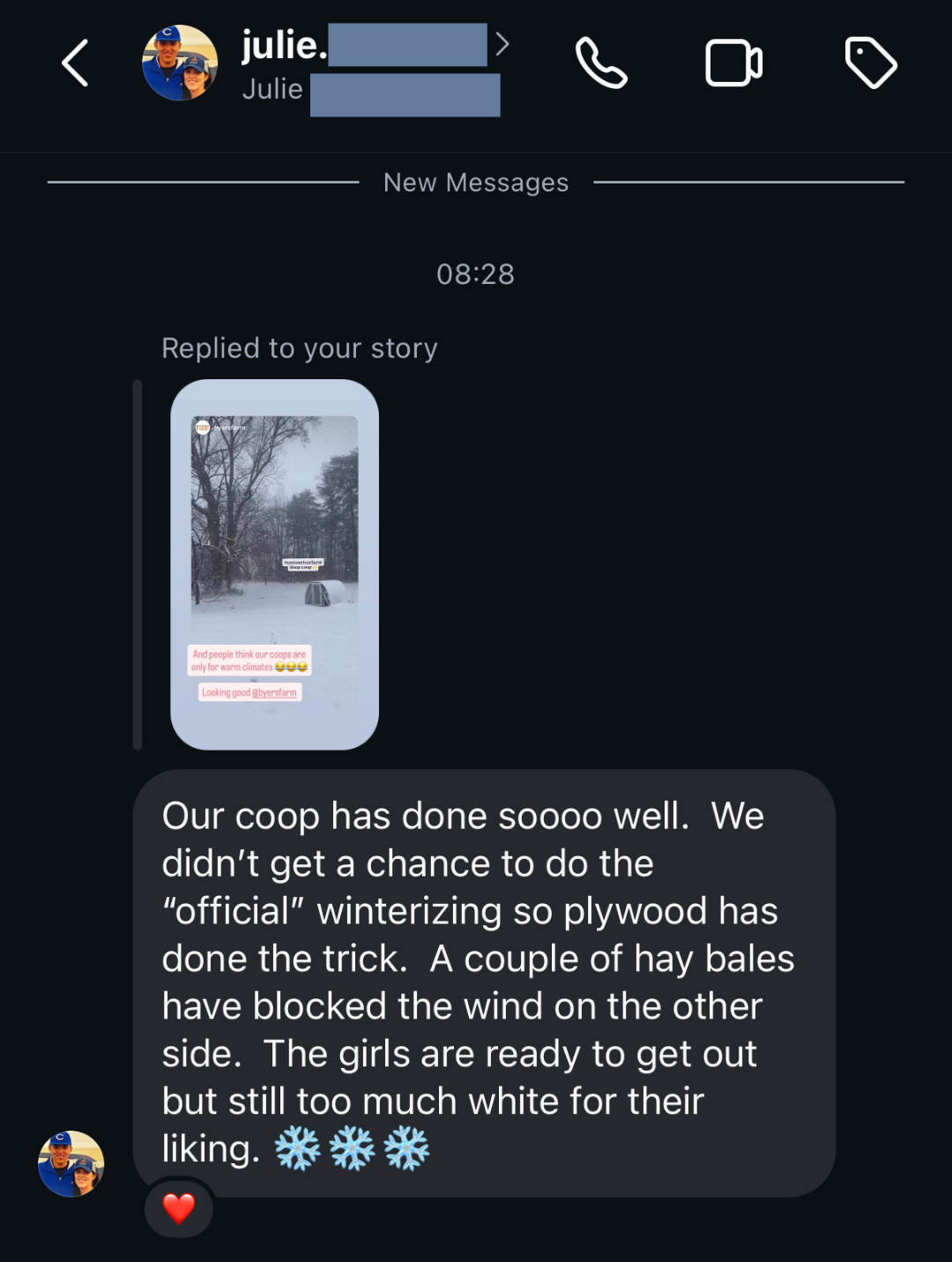
“We are in the middle of a bad ice storm and now blizzard with possibly 10” of snow. Their hoop house is plenty warm…temperature is 20F with wind chill of 3F.”
Some More Testimonials
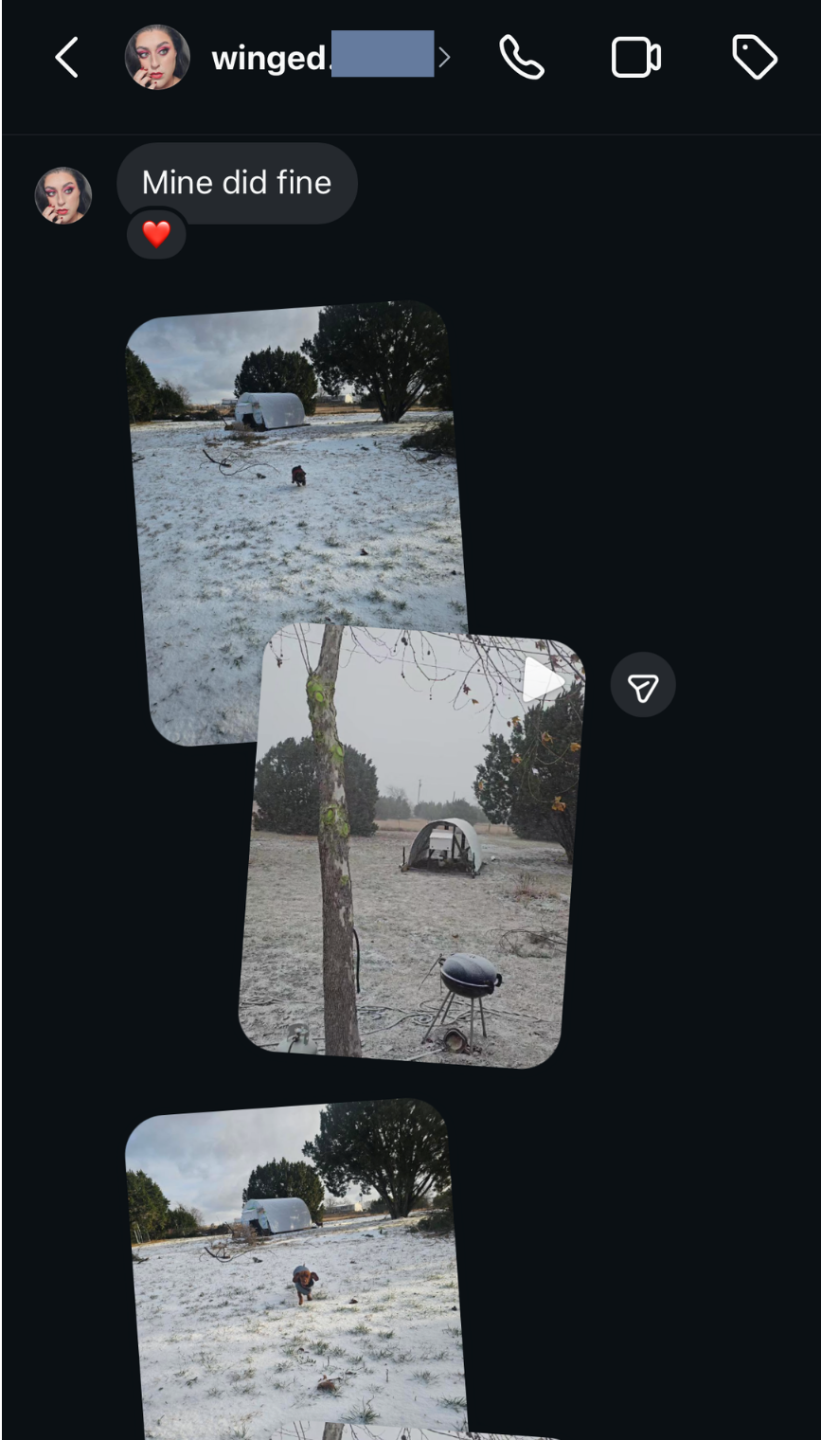

What You'll Get With Our Blueprints

Hoop Coop Blueprints + Material List
GRAB YOURS TODAYWhat Our Customers Say:
"I purchased your plans and built the hoop coop with 3 cattle panels. I am 71 years old and it took me a week to finish."
- Tony H.
"We have coyotes and bobcats in our area. I was nervous about using a mobile coop, but after building yours and moving it regularly, we haven't lost a single bird. The design really works."
- Sarah M.
"As a former contractor with over 30 years in the field, I actually removed the nest box from my Carolina coop replica and incorporated your roll out nest box into that coop also. Excellent job with the plans and detailing the build in your videos. The best part of your plans are found in the very first picture, from a pile of lumber to that. No waste!"
- Kenny H.
Still Have Questions?
Check out our full guide on hoop coop design HERE for more detailed information on how these coops work and what makes them different.